
August 8, 2025
Trump fires IRS Chief after Senate orders audit of Epstein’s finances
By Camaron Stevenson
There are two Epstein files — and the avenues to investigate the lesser-known of the two are about to narrow considerably.
First, there are THE Epstein Files: documents from the US Department of Justice’s investigation into Jeffrey Epstein’s alleged sex trafficking ring, which are believed to have substantiating evidence linking his criminal operation to some of the wealthiest, powerful, and most well-connected people in modern society.
But there’s another Epstein file in the government’s possession that has more than little black books and inconclusive flight records. These documents contain a clear, traceable money trail that links Epstein to both his clients and his victims through bank records and tax filings.
The US Senate Finance Committee has been investigating Epstein’s financial ties since shortly after his arrest in 2019, when prosecutors began to take aim at his wealthy associates, like former Wall Street executive Leon Black. A committee aide involved in the investigation, who spoke under the condition of anonymity, said that the revelation that billionaires were paying a man with no formal training to do their taxes raised some major red flags.
“Our entry point here was that Jeffrey Epstein was providing tax and estate planning advice for a whole bunch of rich people, including Leon Black,” the aide said. “Black is a multi, multi, multi-billionaire. He’s extraordinarily wealthy. He already has access to the best tax lawyers and accountants in the world. Jeff Epstein was not a tax lawyer or an accountant. So it’s really inexplicable that Epstein could have had proprietary tax solutions that nobody else had.”
The committee caught its first big break in 2022, when investigators discovered a previously unknown $12 million payment Black made to Epstein. They determined that Black’s payment to Epstein for alleged tax and estate planning services was over $100 million — far more than the actual value of those services, even for a top accounting firm. This revelation was followed by a $62.5 million settlement Black paid to the US Virgin Islands in 2023, wherein he admitted that “Epstein used the money Black paid him to partially fund his operations in the Virgin Islands.”
Despite these revelations, the IRS has declined to audit both Black and Epstein, according to a statement Black gave to the committee in 2023. US Sen. Ron Wyden (D-OR), Ranking Member of the Finance Committee, wrote a letter to IRS Commissioner Billy Long on July 31, demanding a detailed report explaining the agency’s reasoning for turning a blind eye to Epstein’s suspiciously lucrative arrangement with Black.
“These payments were well in excess of expected compensation for tax and estate planning services – particularly in a case where Epstein’s work had to be vetted by other legal and accounting professionals, at times was not viewed as useful, and included instances of substantial misrepresentations of tax laws,” Wyden wrote. “I can’t help but question whether this case was legitimate tax planning, or if Black felt obligated to make these payments to Epstein for unstated reasons.”
One week after Wyden ordered the report, Long was fired by Trump.
It’s unlikely that Long, a Trump loyalist, would have complied with Wyden’s request, but his dismissal serves to delay a response and run out the clock on an audit of Epstein’s finances until after Trump leaves office. The statute of limitations for the IRS to audit a deceased person’s taxes is six years; Epstein died on August 10, 2019.
While there are exceptions that allow for an audit to take place at any time, the road gets rougher the longer the wait, as does the ability for the audit to extend beyond six years’ worth of filings. An audit into Black’s finances could be initiated at any time, which would limit the investigation to Black and Epstein, omitting any of Epstein’s other clients.
The IRS’ limitations have no bearing on Wyden’s Senate investigation, however, which is currently working to compile more evidence to justify an audit into Epstein’s finances. Such an effort brings with it a limitation of its own: access to the necessary documents held by the Treasury has been revoked by the Trump administration, and Senate Republicans have refused to issue a subpoena to obtain them.
This post first appeared in Below The Beltway, a COURIER Substack by Camaron Stevenson.
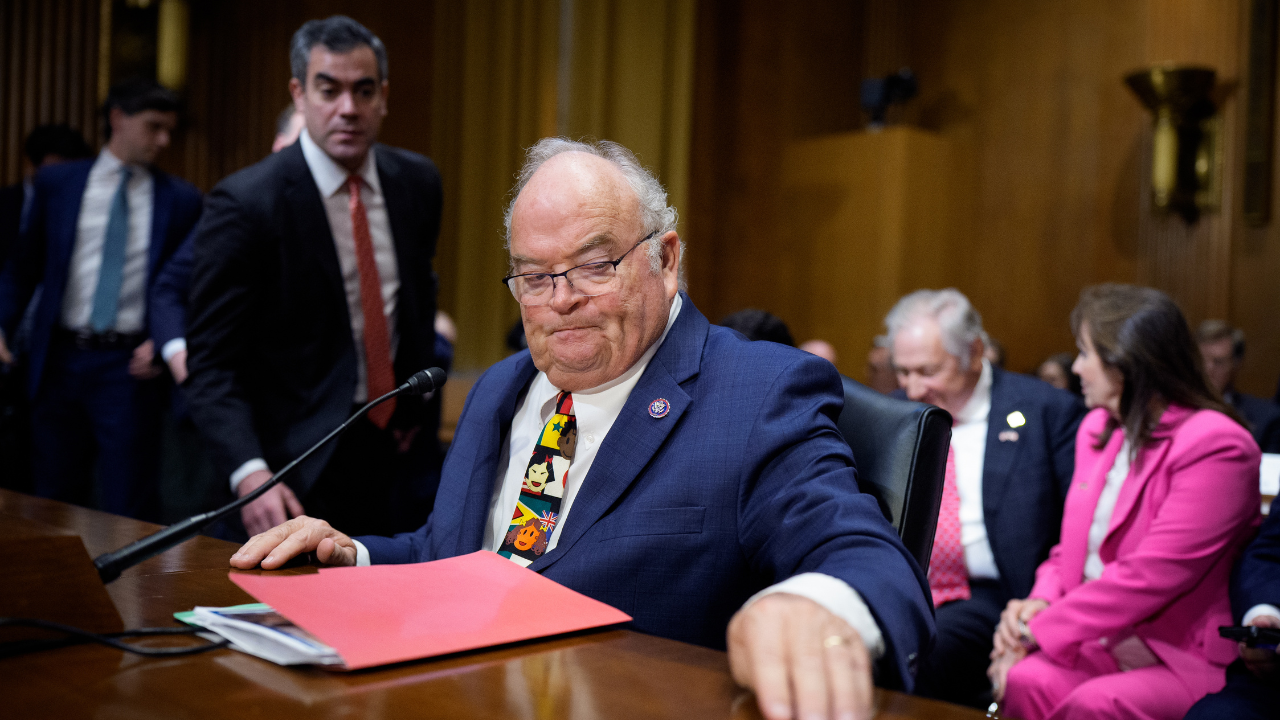
Photo creditFormer Rep. Billy Long (R-MO), U.S. President Donald Trump’s nominee to be Internal Revenue Service Commissioner, departs after a Senate Finance Committee nomination hearing on Capitol Hill on May 20, 2025 in Washington, DC. (Photo by Andrew Harnik/Getty Images)