
November 18, 2026
A Forensic Expert Says Epstein Was Strangled. Here’s What We Know
By Courier Staff
This article contains references to suicide.
More than seven years after convicted sex offender Jeffrey Epstein was found dead in his Manhattan jail cell, a forensic expert is publicly challenging the official ruling that he took his own life.
Dr. Michael Freeman, editor-in-chief of the Journal of Forensic and Legal Medicine, presented his findings in London on Nov. 16 and concluded that Epstein’s death was more likely a homicide than a suicide. Freeman has served as a cause-of-death expert for U.S. attorneys general in deaths in police custody, including George Floyd’s.
“The injuries and the way the body was found don’t match up,” Freeman told BBC Newsnight. “There’s only one remaining explanation then, and that is that the death was as a result of a homicide.”
New York City’s medical examiner ruled Epstein’s 2019 death a suicide by hanging, and the office “stands by its determination,” a spokesperson told CBS News. No court, prosecutor or official investigation has found that anyone killed Epstein.
What Freeman found
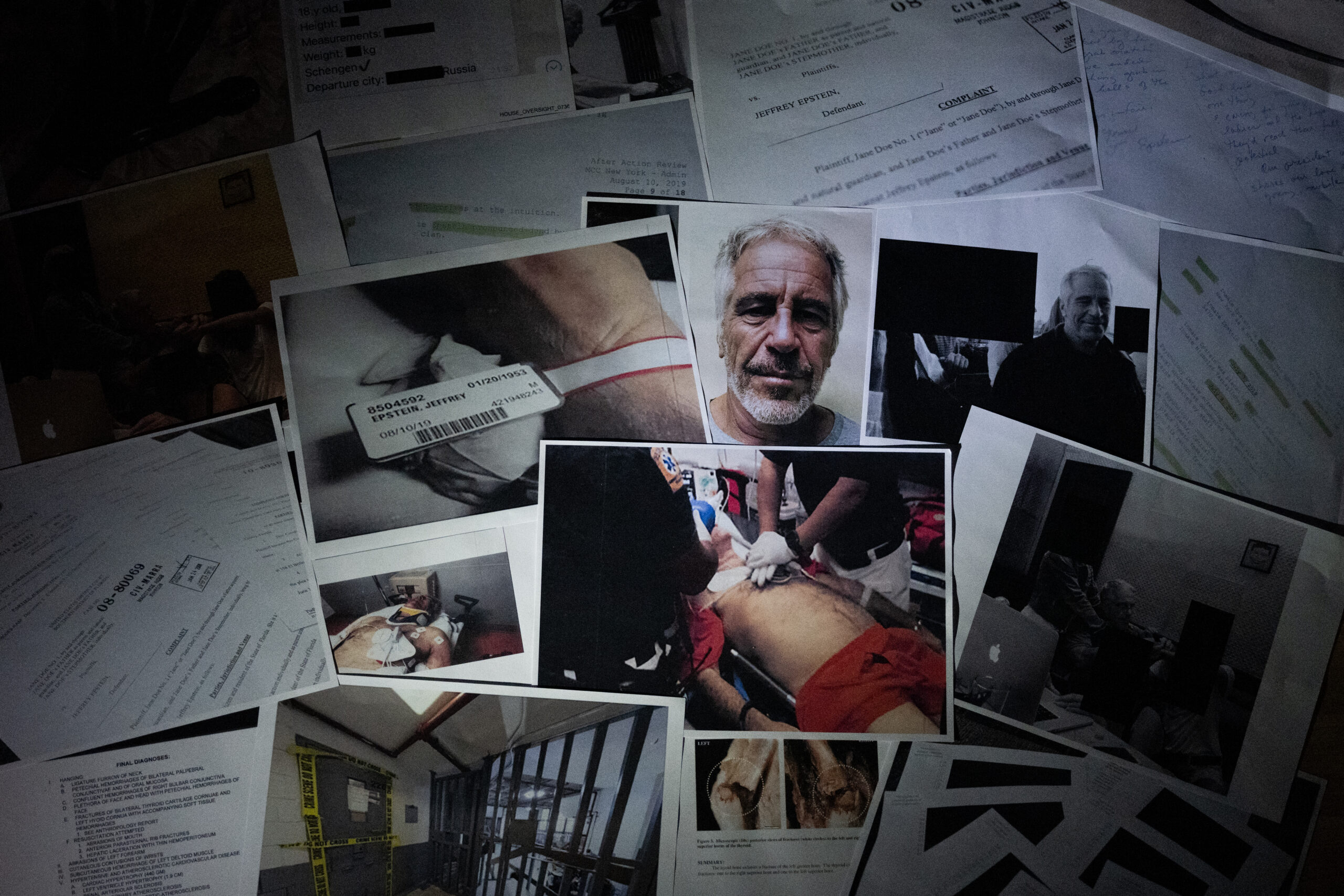
Freeman never examined the body. He worked from the medical examiner’s file and autopsy photos, which Epstein’s brother, Mark Epstein, provided. Mark Epstein has long maintained that his brother was murdered. Freeman says his analysis is independent and that Mark Epstein didn’t pay him. Working with forensic researchers Anders Eriksson and Itiel Dror, he points to:
- A second ligature mark on the neck, lower and at a different angle than the first
- What appear to be fingernail marks above the ligature, which he says “would be consistent with strangulation, particularly from behind”
- Injuries to the hyoid and thyroid in the neck
- A deep hemorrhage in the left shoulder and facial injuries he says are consistent with being struck
Freeman believes Epstein was strangled with a ligature that was then used to suspend his body from the bunk bed. Asked who might have killed Epstein, he said he had “no idea.”
What’s still unproven
Freeman’s research has not passed peer review. A journal rejected it, and he plans to resubmit. He has published the medical examiner’s files so others can check his work. “Don’t take my word for it, let everybody look at it,” he told the BBC.
The medical examiner who performed the autopsy told federal investigators that Epstein’s injuries were more consistent with suicide by hanging than with strangulation, and that there were no defensive wounds of the kind seen in strangulation victims. Dr. Barbara Sampson, the chief medical examiner at the time, has said, “I stand firmly behind our determination of the cause and manner of death for Mr. Epstein.”
What’s already established
Although Epstein died, the government’s failure to keep him safely in custody is documented. A 2023 report by the Justice Department’s inspector general found that jail staff:
- Failed to assign Epstein a cellmate the day before he died, despite a directive to do so
- Skipped required overnight counts and checks, then falsified records to show they had been done
- Left excess blankets and linens in his cell, some torn into nooses
- Recorded only about half of the jail’s cameras because of a known equipment failure that was never fixed
Two guards were charged with falsifying records. The charges were dropped after they completed deferred prosecution agreements. The inspector general found no evidence contradicting the FBI’s conclusion that no crime was involved, and no evidence that anyone besides locked-in inmates was in the unit that night.
Investigators also took no photo of the scene before Epstein’s body was taken down, and the cell wasn’t preserved.
Epstein’s death ended any chance of a trial and left survivors without their day in court. The doubts that persist are the cost of an investigation that failed from the start.
Follow our Contradictions Tracker, and find all of our reporting under Coverage + Accountability at epsteincoverup.us.