
July 29, 2025
Trump admin blocks investigation into Epstein money trail
By Camaron Stevenson
A four-year congressional investigation into the assets of millionaire financier and convicted sex offender Jeffrey Epstein has been stalled indefinitely by the Trump administration, which has revoked access to sensitive documents that had been granted under former President Joe Biden.
The US Senate Finance Committee began its inspection of Epstein’s financial history in 2022, when ranking member Sen. Ron Wyden (D-Oregon) discovered Wall Street executive and Trump ally Leon Black vastly overpaid Epstein for tax and estate planning services. Further digging revealed that Black had reached a $65 million settlement agreement in 2023 with the US Virgin Islands — home to Epstein’s infamous enclave — in exchange for immunity from an Epstein-related prosecution. Immunity was granted despite prosecutors’ conclusion that “Epstein used the money Black paid him to partially fund his operations in the Virgin Islands.”
“Over the course of the ongoing Finance Committee investigation, my staff have uncovered new evidence, including through review of federal government records, indicating that money paid by Black to Epstein was used to finance Epstein’s sex trafficking operations,” Wyden said. “Major US financial institution failed to do legally required due diligence on the payments.”
JP Morgan Chase settled lawsuits similar to Black’s in 2023 with the US Virgin Islands and Epstein’s alleged victims, where the bank paid over $350 million and admitted no wrongdoing in its failure to disclose 15 years’ worth of suspicious activity by its client until after Epstein was arrested.
Based on the committee’s findings, the Biden Administration in 2024 granted investigators access to suspicious activity reports held by the US Treasury that were filed confidentially in 2019 by Bank of America, Bank of New York Mellon, Deutsche Bank, and JP Morgan Chase. Due to the sensitive nature of the reports, committee staffers were prohibited from taking them from the Treasury or making any copies, but they were allowed to write down notes on what they found.
Investigators only had a few months to review the thousands of documents detailing Epstein’s transactions, according to The New York Times, before access was cut off in January of 2025. In that time, investigators found over 4,000 suspicious transactions totalling over $1.5 billion from one bank alone, but were unable to inspect the money trail before being roadblocked by the Trump administration.
Repeated requests to renew clearance have been ignored by the US Department of Justice, Wyden said, and the US Treasury lied to reporters, falsely pinning blame on the Biden administration.
“Despite Senator Wyden’s fantasies, there are no hidden files at Treasury,” said a Treasury spokesperson. “The Biden Administration had access to this information during its tenure. The fact that Senator Wyden never asked Joe Biden or Merrick Garland to address this matter shows this is pathetic political theater and a complete joke.”
Instead, the White House has worked feverishly to avoid transparency. In March, FBI agents were ordered to catalog mentions of Trump and other prominent figures found in the DOJ’s investigation of Epstein. Months later, US Deputy Attorney General and Trump fixer Todd Blanche met privately with Epstein accomplice and former girlfriend Ghislaine Maxwell, where she was granted partial immunity in exchange for information on at least 100 names the DOJ found in the Epstein files.
This post first appeared in Below The Beltway, a COURIER Substack by Camaron Stevenson.
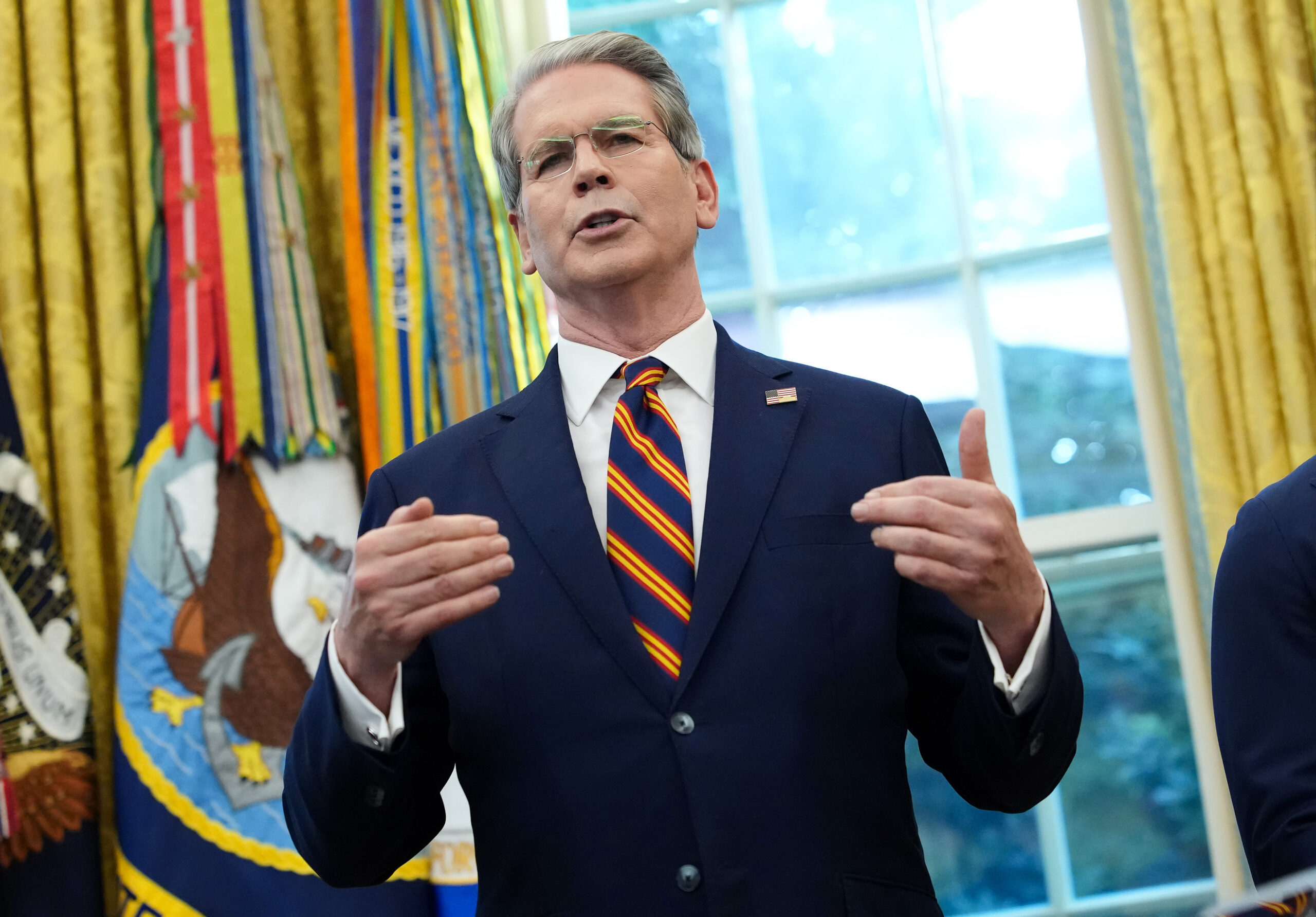
Photo Credit: Treasury Secretary Scott Bessent (C) speaks as U.S. President Donald Trump announces plans to host the 2026 G20 summit in Miami, Florida during a press availability in the Oval Office (Photo by Kevin Dietsch/Getty Images)